What Makes a Great Website for a Photographer? 6 Things to Consider.
Your photography speaks for itself, but does your website?
For photographers, a website is more than a place to showcase your portfolio. It’s an opportunity to communicate your style, connect with your ideal clients and make a lasting first impression.
A thoughtfully designed website brings together beautiful imagery, clear messaging and an intuitive user experience to create a cohesive online presence. It should not only reflect the quality of your work but also help potential clients understand what makes you different and why they should work with you.
Whether you’re building a new website or considering a refresh, here are six things to consider when creating a website that works as beautifully as your photography.
1. A Portfolio That Tells a Story
Your portfolio is often the first place visitors go when they land on your website. It’s your opportunity to show potential clients what you do best and help them envision what you could create for them.
Rather than including every image you’ve ever taken, focus on selecting work that represents your style, your strengths, and the types of projects you’d like to book more often.
Consider organizing your portfolio into galleries that make it easy for visitors to explore your work. For example, a wedding photographer might feature weddings, engagements and editorial work, while a family photographer might organize galleries by family sessions, newborns and maternity.
The goal is to create a portfolio that feels intentional and easy to navigate, allowing your best work to take center stage.
2. A Design That Reflects Your Photography Style
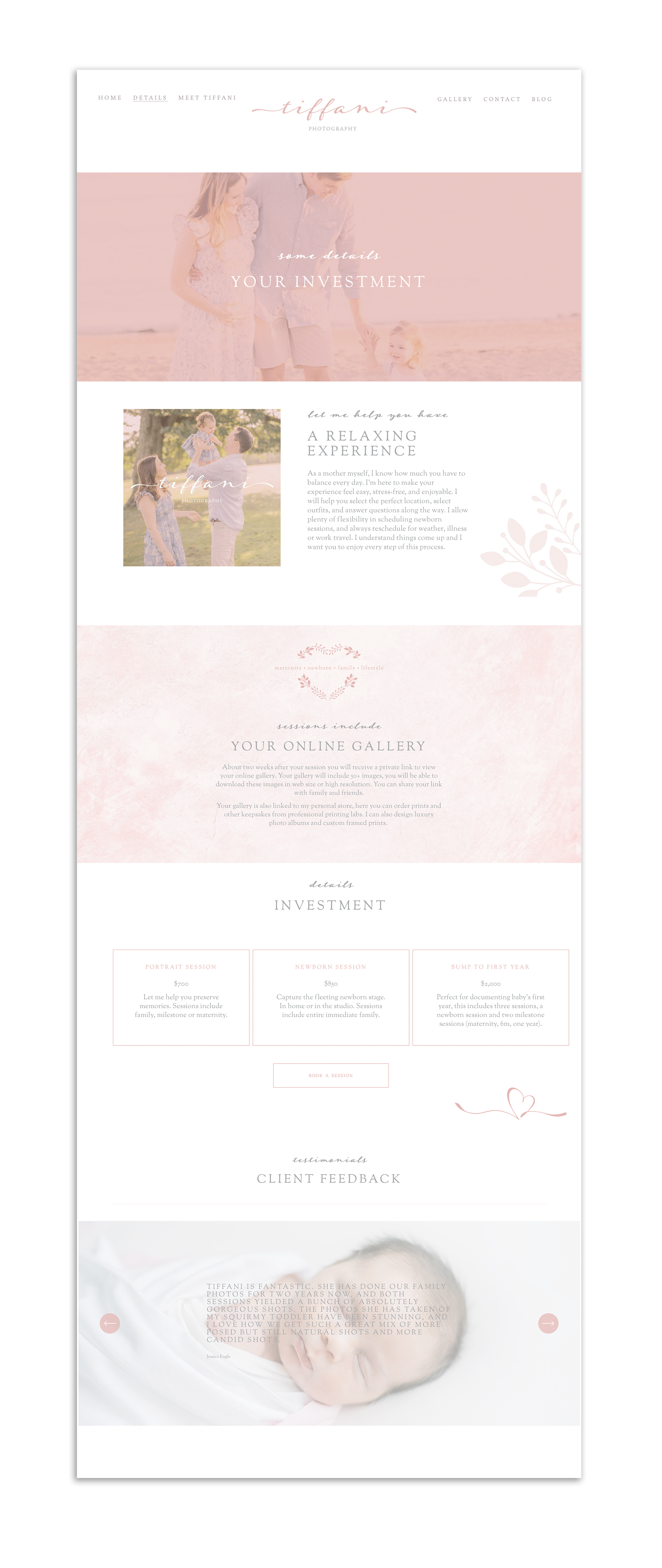
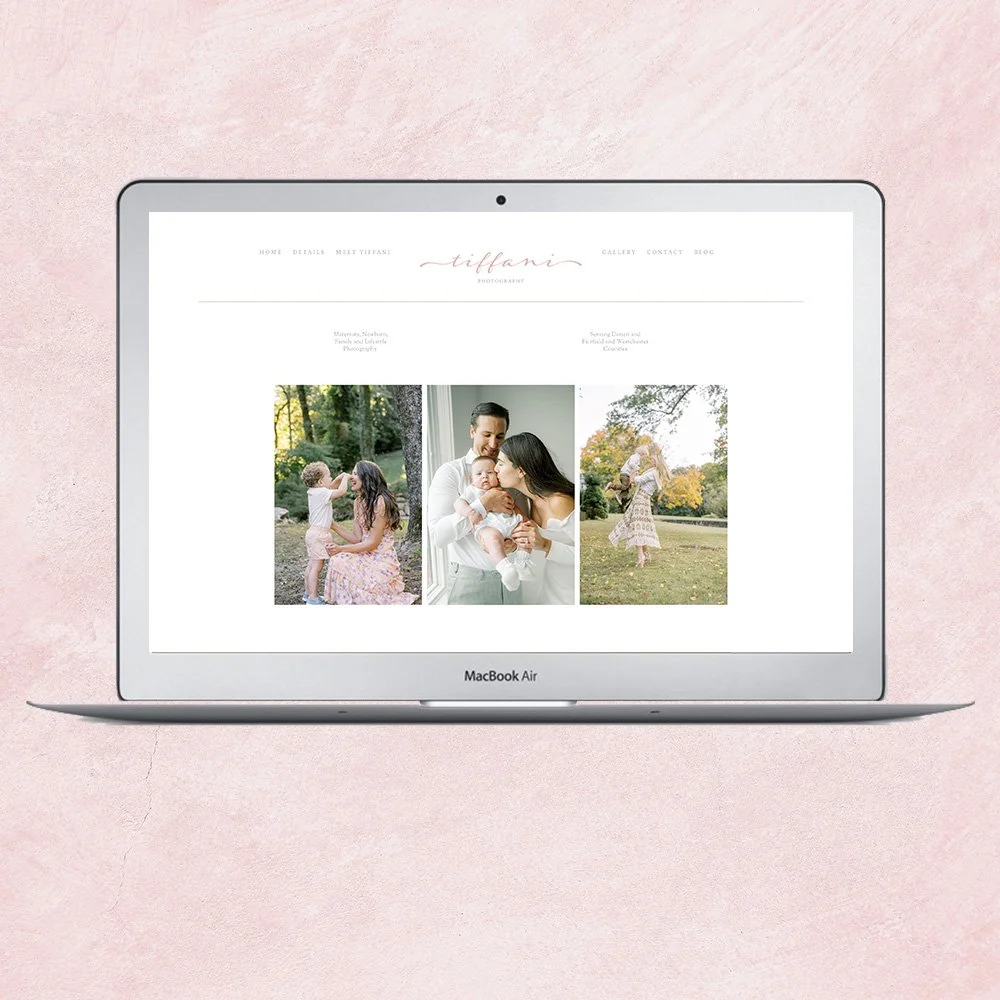
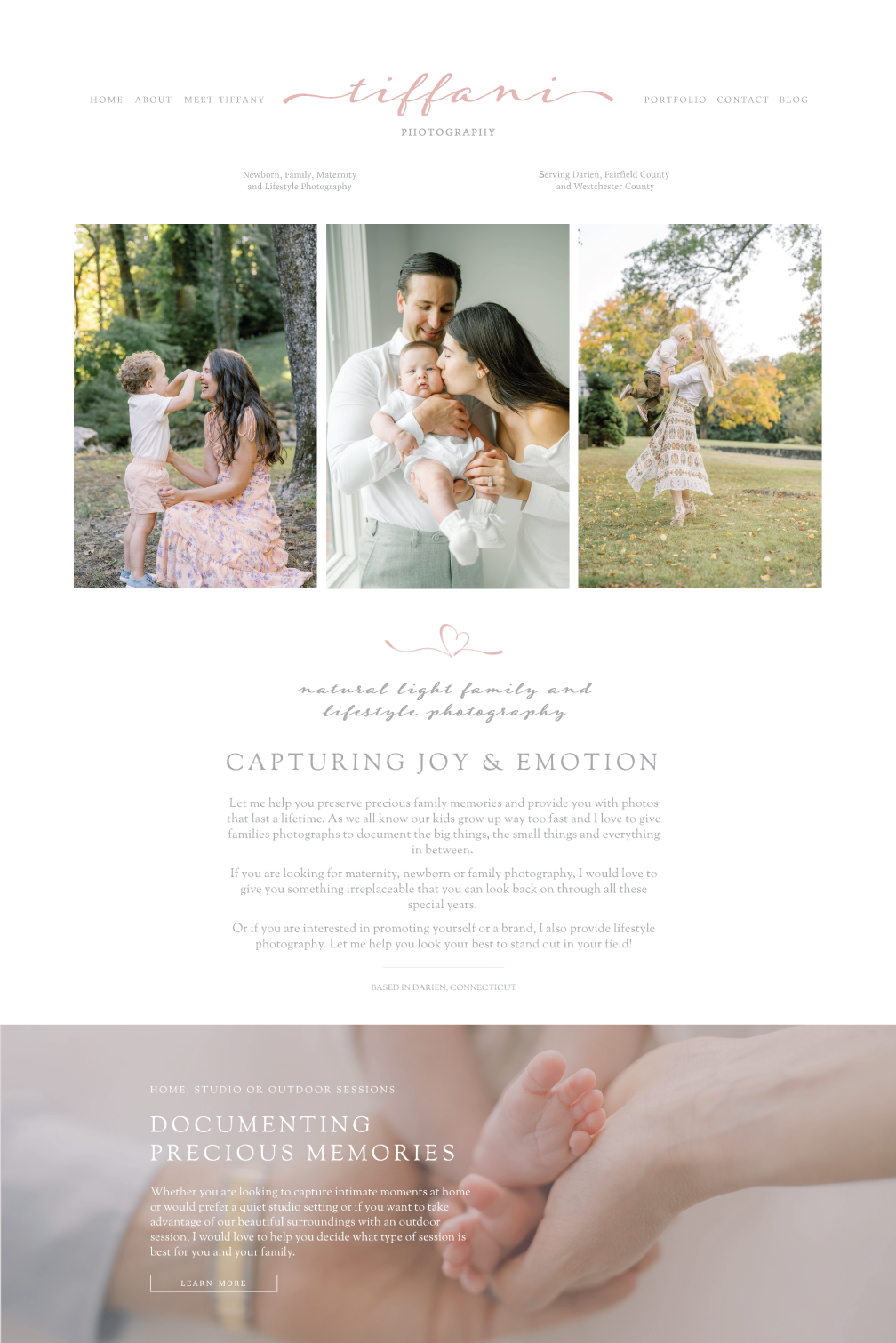
Your website should feel like a natural extension of your photography. Every design decision, from typography and color to spacing and layout, contributes to how visitors perceive your brand.
A photographer whose work is light and airy might gravitate toward a clean layout, generous white space and understated typography. Someone with a more dramatic, editorial style might prefer bold typography, deeper colors, or a more unconventional layout.
There isn’t one right aesthetic. What matters is that your website feels cohesive with your work and the experience you want to offer your clients.
Thoughtful design doesn’t compete with your images. It gives them room to shine.
3. Clear Messaging That Connects With Your Ideal Clients
Beautiful photography can capture someone’s attention, but your website copy helps them understand whether you’re the right photographer for them.
When visitors land on your homepage, they should quickly understand what you offer, who you work with, and what makes your approach unique.
Instead of relying on a headline that simply says “Welcome” or “Photography,” use language that communicates your specialty and speaks to your ideal client.
Your website should also reflect your personality and approach. Are you drawn to candid, documentary-style photography? Do you specialize in refined editorial imagery? Is your experience especially relaxed and personal?
These details help potential clients understand not only what you do, but what it might feel like to work with you.
Clear messaging and thoughtful design work together to create a website that feels authentic to your business.
4. An About Page That Builds Connection
Photography is personal. Clients are often inviting you into meaningful moments in their lives, so they want to know something about the person behind the camera.
Your About page is an opportunity to share your story, your approach and the perspective you bring to your work.
You don’t need to share everything about yourself. Focus on the details that help potential clients connect with you and understand what makes your experience different.
Include a photograph of yourself, a little about your background, and what you love about the work you do. If your personality or process is an important part of your business, let that come through.
A thoughtful About page helps turn a portfolio into a more personal experience and gives visitors another reason to reach out.
5. An Easy Path From Browsing to Booking
Your website may look beautiful, but visitors also need to know what to do next.
Think about the journey someone takes from discovering your work to deciding they want to inquire. Is it easy to find your contact information? Are your services clearly explained? Do your pages guide visitors toward taking the next step?
Use clear calls to action throughout your website, whether that’s “View the Portfolio,” “Explore Services,” or “Inquire About Your Date.”
Your contact page should be straightforward and welcoming. If you use an inquiry form, ask for the information you need without making the process unnecessarily complicated.
The easier you make it for potential clients to connect with you, the fewer obstacles stand between an interested visitor and a new inquiry.
6. A Website That Works Beautifully on Mobile
Your website needs to look and function just as well on a phone as it does on a desktop.
Potential clients may discover your work through Instagram, a referral, or a Google search, then visit your website on their phones. If images take too long to load, text is difficult to read, or navigation is frustrating, they may leave before exploring your work.
A well-designed mobile experience considers more than simply shrinking the desktop layout. Images should display beautifully, menus should be easy to use, text should be readable, and contact forms should be simple to complete.
It’s also important to optimize image sizes so your photography looks beautiful without unnecessarily slowing down your website.
A seamless mobile experience makes it easier for visitors to explore your portfolio, learn about your services, and get in touch wherever they happen to be.
Bringing It All Together
A great photographer website does more than display beautiful images. It brings together portfolio curation, thoughtful design, clear messaging, and an intuitive user experience to create a cohesive online presence.
When these elements work together, your website becomes a reflection of your brand and a valuable tool for connecting with the clients you want to attract.
If your website no longer reflects your work, your style, or where you want your business to go, it may be time to rethink how everything comes together.
At Whitney Hays Design, I create thoughtful branding and strategic Squarespace websites for creative businesses. My goal is to help you build an online presence that feels true to your work, connects with your ideal clients and supports your business as it grows.
Thinking about a new website? Get in touch to start a conversation about your project.